
Pride In Our Backyard: The Frida Cinema and Queer Belonging in Downtown Santa Ana
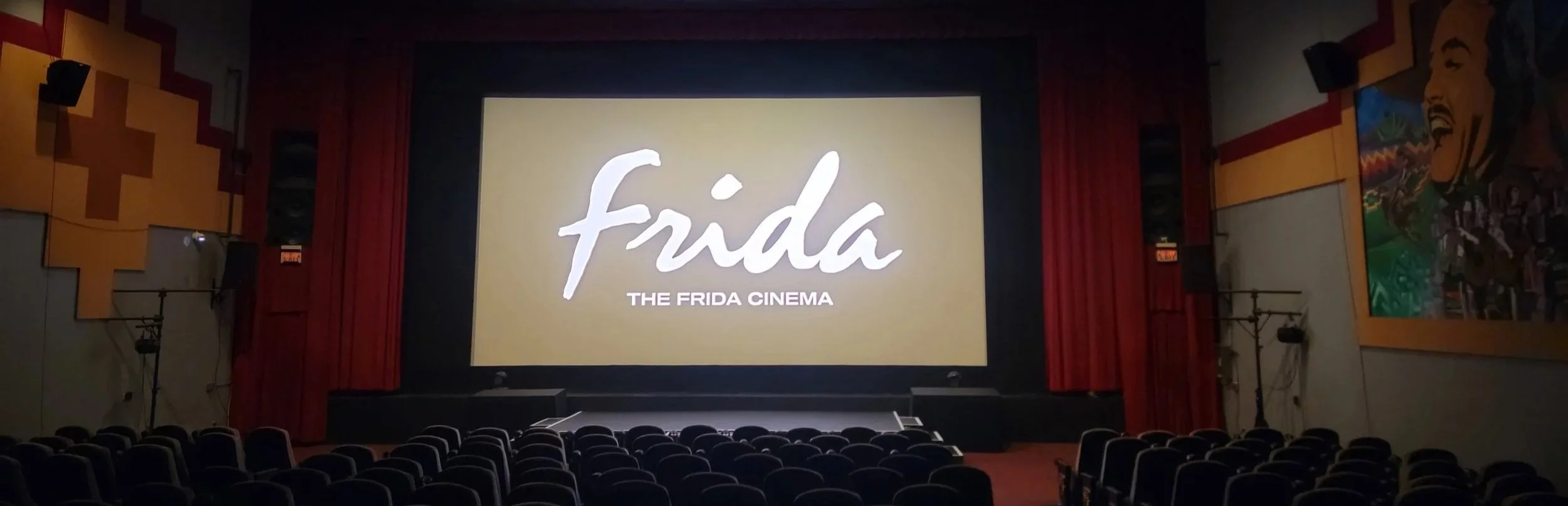
One of The Frida Cinema’s 200 seat auditoriums with the Frida’s logo emblazoned on the screen
In Orange County, queer spaces are often something you learn about through word of mouth. They are not always obvious. They do not always announce themselves. Sometimes they are places you find because someone you trust says, quietly, “You’ll feel okay there.”
In Downtown Santa Ana, one of those places has been hiding in plain sight for years. It just happens to be a movie theater.
The Frida Cinema sits along Fourth Street, surrounded by foot traffic, restaurants, street noise, and the steady churn of a neighborhood that never quite stands still. From the outside, it looks like an arthouse cinema doing what arthouse cinemas do. From the inside, it feels like something else. A place where people linger after the credits roll. A place where regulars recognize each other. A place where queerness is not a theme night, but part of the atmosphere.
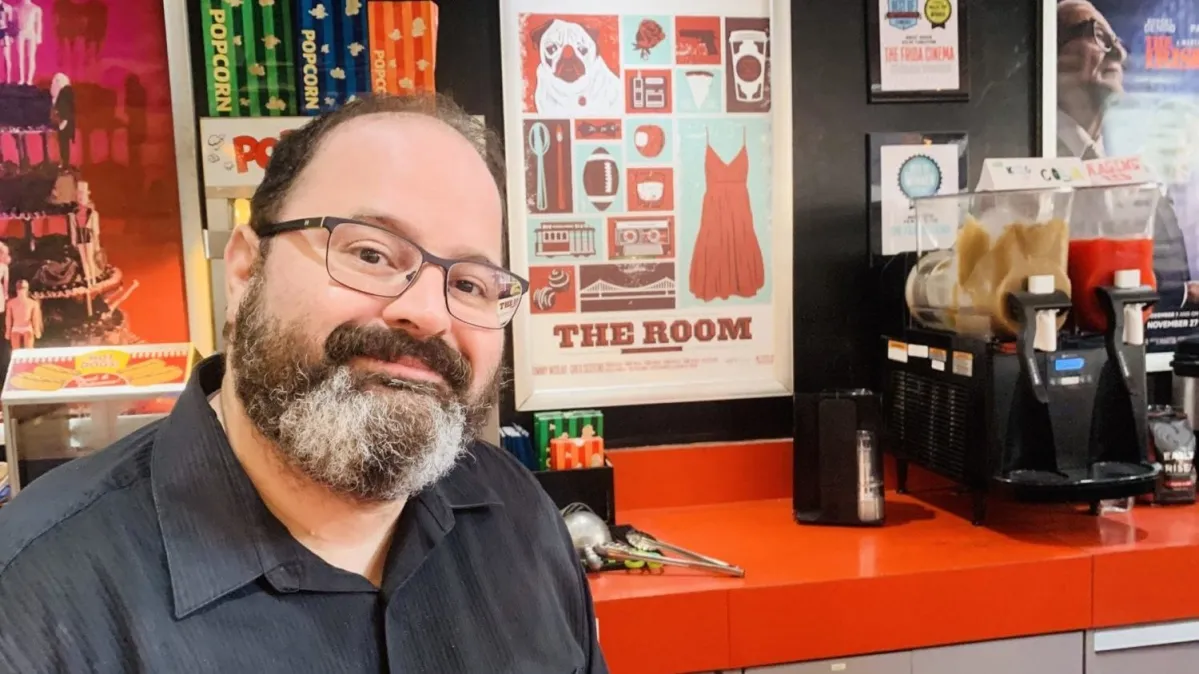
Logan Crow, The Executive Director of The Frida Cinema
That did not happen by accident.
Logan Crow, the Frida’s Executive Director, traces this vision back to childhood. Long before Santa Ana entered the picture, cinema had already claimed him. He talks about discovering art house films early and realizing that the magic was not just on the screen. It was in the rooms where those films were shown. Volunteering at the Egyptian Theatre in Hollywood sealed it. That sense of walking into a space where being a little different felt normal stayed with him.
When the Frida opened in 2014, that memory became a blueprint.
The Frida is Orange County’s only nonprofit art house cinema, and that distinction matters. Crow is candid about what the alternative would look like. A commercial theater fills seats by chasing the safest bets. The Frida operates on a different logic. Programming starts with intention rather than guarantees. Films are chosen because they say something, because they expand a conversation, or because a community has claimed them over time.
That approach shows up clearly in the Frida’s relationship with LGBTQIA+ cinema. Queer stories are not confined to a single genre or a single month. They show up across the calendar, sometimes as new independent releases that might not draw big crowds, sometimes as cult favorites that queer audiences have kept alive for decades. Crow is realistic about attendance. Some screenings sell out. Others do not. But the value is not measured only in ticket counts.
If even a small audience leaves having seen themselves reflected, the work still matters.
That belief carries through to the people who make the Frida run. Crow shared stories about volunteers who told him this was the first workplace where they were allowed to dress in a way that felt true to them, or where choosing their own name did not require an explanation. He spoke about the mix of pride and frustration that comes with hearing that. Pride that the Frida can offer something so affirming. Frustration that it is still so rare elsewhere.
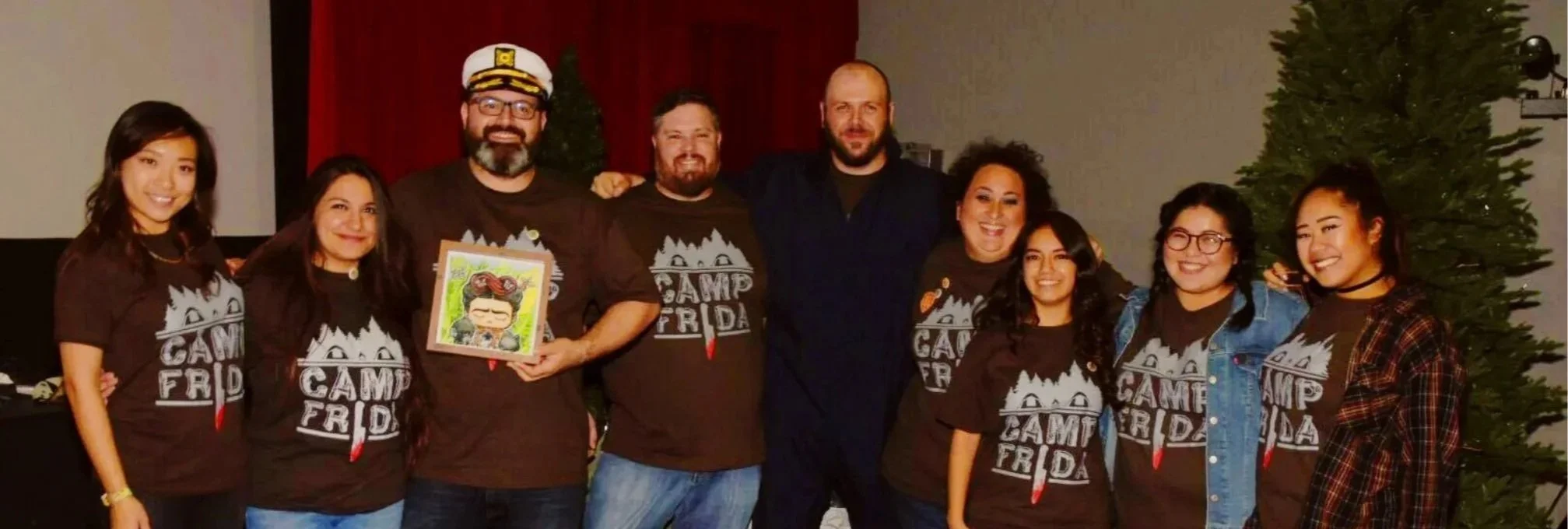
Logan Crow alongside the volunteers who brought the very first Camp Frida to life, an annual horror marathon that has since become a beloved tradition for the theater’s audience.
At the Frida, those choices are treated as non-issues. If something is safe, lawful, and respectful, it is allowed. That simplicity has had a profound effect. People feel it the moment they walk through the door.
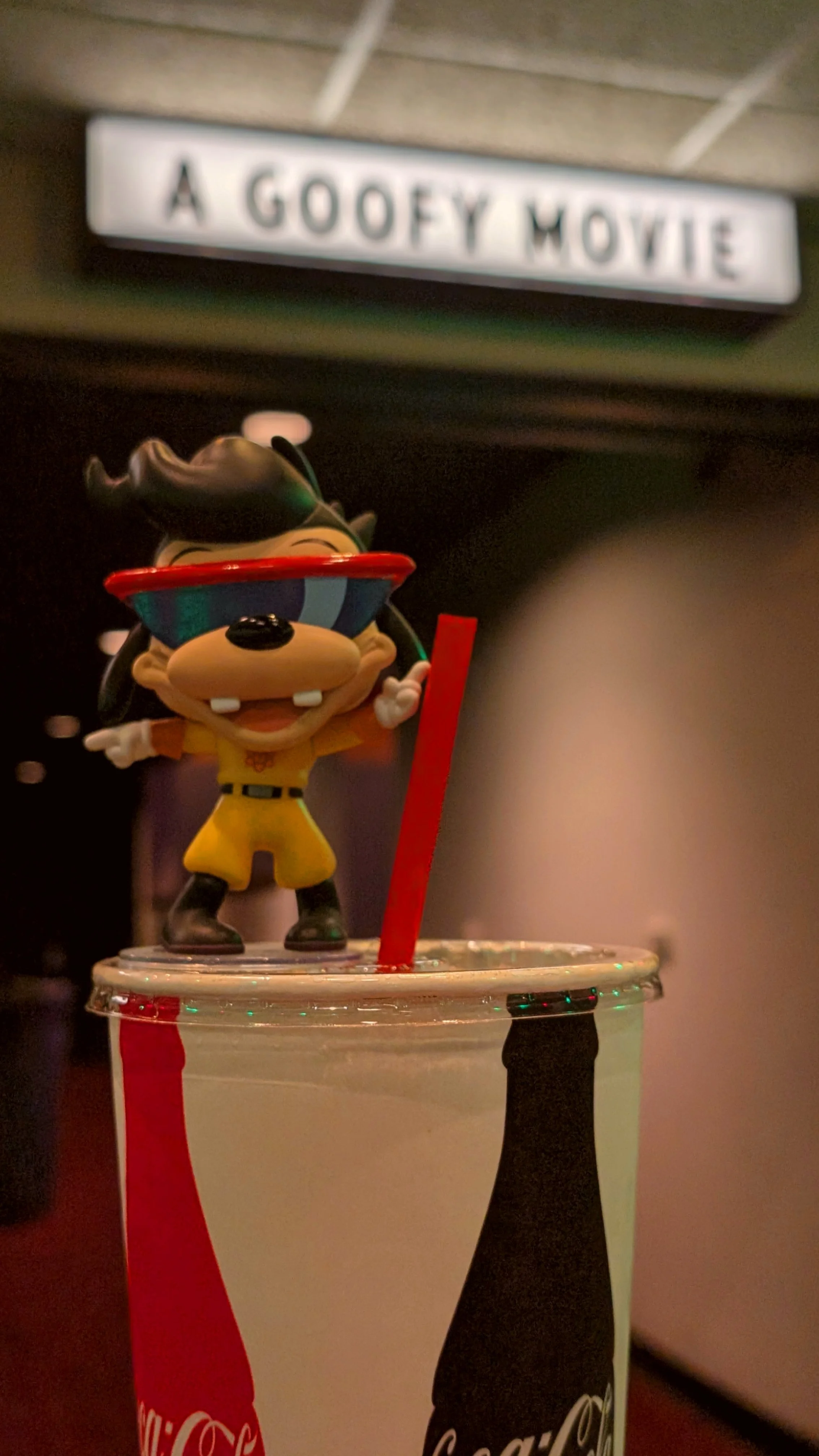
Power Line waiting with his Large Soda for a screening of The Goofy Movie
Over time, that feeling has turned the Frida into something beyond a theater. It has become a social anchor. Crow talks about how many informal gathering spaces have disappeared, places where you could sit without pressure, talk without shouting, and exist without buying into a specific scene. Movie theaters, especially art houses, can still do that work if they choose to. The Frida has chosen to.
Camp Frida has become one of those events people mark their calendars for without needing a reminder. What started as a scrappy overnight horror marathon has grown into a ritual for queer horror fans across Orange County, a space where loving the strange, the campy, the unsettling, and the transgressive feels completely natural. The lobby buzzes differently during Camp Frida. Costumes appear. Sleep becomes optional. The line between fear and fun blurs in the best way. It is not just about watching movies back to back. It is about being in a room where everyone understands why horror hits the way it does, especially for people who have grown up reading themselves into monsters, survivors, and final girls long before they saw themselves reflected anywhere else.
That connection is something Logan Crow understands deeply. In talking about the Frida’s programming, he returned again and again to the idea of community claiming certain films and genres as their own. Horror, in particular, has always offered queer audiences a place to process fear, otherness, and resilience without needing permission. Camp Frida leans into that history instead of sanding it down. By treating horror as something worthy of celebration rather than niche novelty, the Frida affirms what queer audiences have always known. These stories matter, even when they are loud, messy, or a little unhinged. Crow spoke about making the Frida a place where people do not just come for a screening, but stay, talk, and build traditions together. Camp Frida is one of those traditions now, proof that when a space listens to its community, the community shows up and stays up all night.
This is part of why the partnership between OC Pride and the Frida has lasted as long as it has. Pride screenings there are not just about watching a film. They are about being present together. Phones stay down. Attention is shared. People hear about community work in a room where listening still feels natural. It is different from scrolling past an update online. It lands differently.
Crow is thoughtful about how cinema has changed. Streaming has made access easier, but it has also thinned out communal viewing. Queer films that once demanded a trip to the theater now wait quietly at home. That convenience has its upsides. It also comes with a cost. When people stop showing up together, something subtle disappears.
The Frida pushes back against that loss simply by insisting on togetherness.
In a county where queer visibility can feel scattered, the Frida offers continuity. It does not promise perfection. It does promise care. It keeps its doors open for stories that take risks and for people who have learned to be cautious elsewhere.
If you have ever wondered where queer life lives between festivals and parades, you can find part of the answer on Fourth Street. Sometimes it looks like a packed screening. Sometimes it looks like a quiet conversation in the lobby. Sometimes it looks like a volunteer being called the right name without hesitation.
For the queer community of Orange County, The Frida Cinema is not just somewhere to watch a movie. It is a place where presence still matters. Where sitting next to strangers can turn into recognition. Where stories that might feel isolating at home take on new weight when experienced together. In a region where queer spaces can feel temporary or conditional, the Frida offers something steadier. It shows what happens when a cultural institution chooses to stay open, attentive, and unapologetically welcoming, even when that choice is not the easiest one.
The Frida’s importance lies in its consistency. It has been there before Pride month banners went up, and it will be there after they come down. It has made room for queer stories when audiences were small and when risks were real. It has given people a place to return to, whether they are discovering a part of themselves for the first time or simply looking to feel less alone on a weeknight. For Orange County’s LGBTQIA+ community, that kind of space is not a luxury. It is part of how community survives, grows, and remembers itself.
As a certain iconic pre-show monologue reminds us, “We come to this place for magic,” and for queer Orange County, The Frida Cinema is one of the places where that magic still feels real, shared, and worth showing up for.
