
Pride In Our Backyard: Why The Laguna Playhouse Matters to Queer Orange County
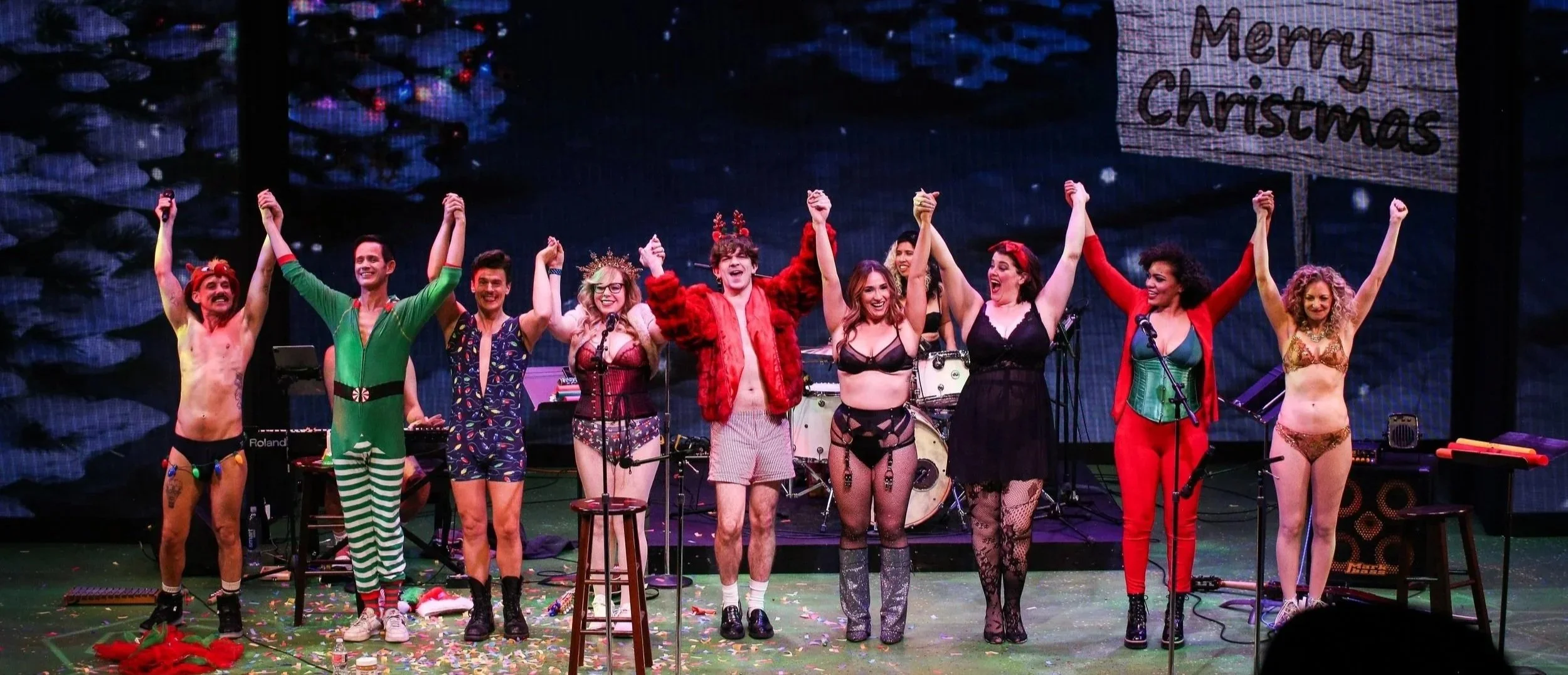
The cast of The Skivvies: Holidazed taking a bow after their opening night at The Laguna Playhouse
Laguna Beach does not usually come up when people talk about queer hubs. It is known for its coastline, its galleries, its postcard version of Southern California. What it is not known for, at least publicly, is being a place where LGBTQIA+ people feel seen without having to explain themselves. And yet, tucked into the heart of the city, The Laguna Playhouse has been doing exactly that for years, quietly and consistently.
For many in Orange County, that quiet consistency is part of the problem. There is a persistent idea that queer life here is thin or fragmented, that community only shows up once a year at a parade or a festival. The truth is messier and far more hopeful. Queer spaces exist all over the county, just not always with a rainbow flag out front. The Laguna Playhouse is one of them.
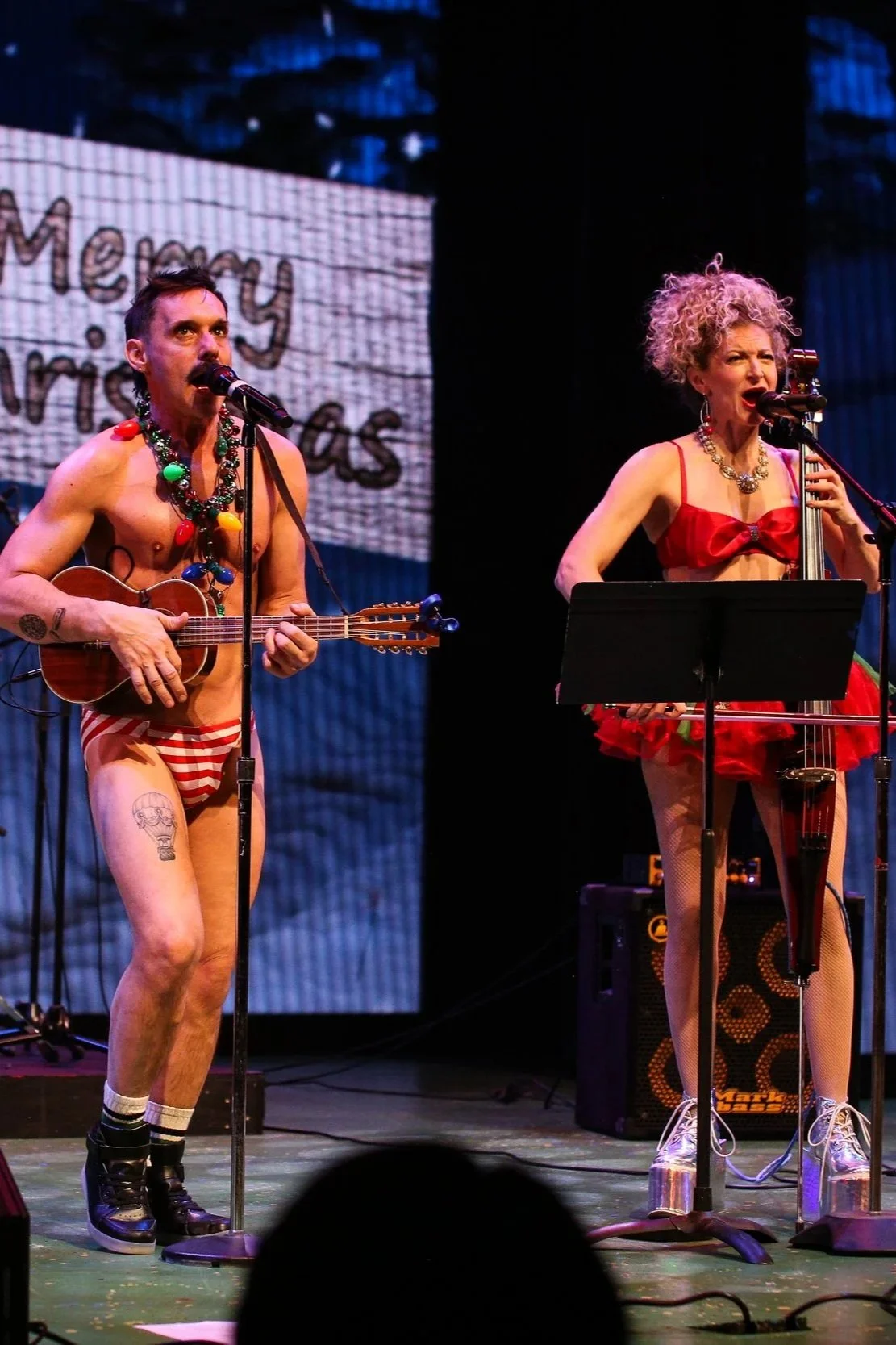
Nick Cearley and Lauren Molina making the Yuletide gay.
That reality clicked into place after seeing The Skivvies: Holidazed, a holiday concert that somehow manages to be musically sharp, deeply silly, and emotionally generous all at once. The show is led by Nick Cearley and Lauren Molina, longtime collaborators whose work blends camp, classical musicianship, improvisation, and a level of trust with the audience that is rare. On paper, it is a show performed mostly in underwear. In practice, it is about joy, release, and the relief of being in a room where no one is waiting for you to mess up.
What stood out immediately was the audience. At first glance, it looked like a crowd you might brace yourself for. Older. Predominantly white. The kind of audience that can make queer folks quietly scan the exits before settling in. But something else happened instead. The room softened. Laughter came quickly. When things went wrong, and they did, the audience leaned in rather than pulling away.
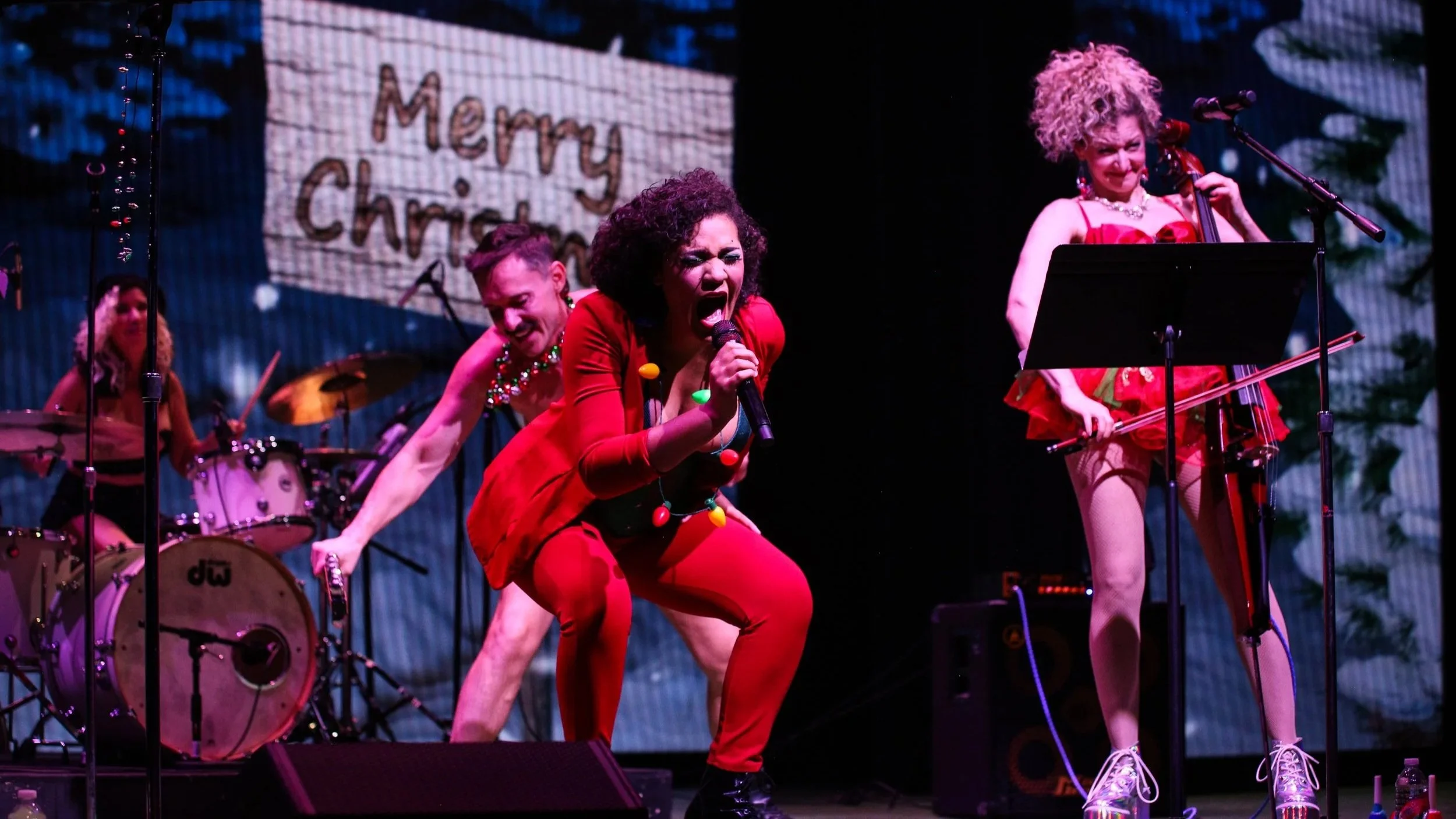
At one point, a necklace snapped and scattered across the stage. Later in the run, a handbell flew into the audience mid-song and landed harmlessly at someone’s feet. These were not disasters. They were gifts. Cearley and Molina talk openly about loving moments like that, about how imperfection creates space for connection. The audience responded in kind, not with discomfort, but with delight.
That response is not accidental. It is cultivated.
“The Skivvies” have been returning to The Laguna Playhouse for over a decade, long enough to build what Cearley describes as a kind of resident family. The same collaborators return year after year. The same rhythms are honored. The show changes, the sets change, the mashups get stranger, but the tone stays intact. That tone matters. It tells audiences, whether they know it consciously or not, that this is a place where experimentation is welcome and difference is not something to tolerate, but something to enjoy.
The Skivvies themselves are a study in longevity, and queer creative ownership. What began nearly fourteen years ago as a playful experiment between two friends making music in their underwear has grown into a fully realized theatrical experience that celebrates queerness without flattening it into a gimmick. Cearley and Molina first brought The Skivvies to the stage with little more than two chairs, a pair of instruments, and a handful of arrangements, following early viral success online and an early live show at Joe’s Pub. From the beginning, the project embraced queer joy, body acceptance, and gender play as natural parts of performance rather than statements that needed explanation. Over time, the show has evolved organically, adding collaborators, theatrical framing, and increasingly ambitious musical mashups, while holding fast to its original tone. At its core, The Skivvies is about agency and trust, about queer artists deciding how they are seen and inviting audiences into that space with humor, warmth, and craft. That vision is what allows the show to feel both polished and loose, surprising and familiar, and it is why audiences keep returning year after year.
For Cearley and Molina, queer spaces in theater are not an abstract idea or a marketing label. They are about intention and boundaries. Molina was direct about it, saying that at this point, choosing where to perform is about standing by their morals and ethics, especially in the current climate. Performing in spaces that welcome LGBTQIA+ audiences is not optional for them, it is foundational. “I don’t think we would perform at a place that wasn’t accepting of the LGBTQIA+ community,” Molina shared.
Cearley echoed that sentiment, framing it as an act of care rather than defiance. Being selective about where they put their energy is part of protecting the joy they have built together over nearly fourteen years of collaboration. “My business is not for them,” he said plainly, referring to audiences or environments rooted in oppression. That clarity helps explain why their work feels so grounded on stage. The joy in The Skivvies does not come from ignoring the world outside the theater walls. It comes from choosing, deliberately, to create something brighter within them.
What makes that joy resonate is the relationship with the audience. Molina described live theater as something that cannot be replicated, not by technology, not by screens, not by algorithms. “You can’t hear a smile,” she said, but you can feel it in a room when people are present together. That gathering, that shared energy, is what makes queer spaces in theater so powerful. Even quiet audiences leave changed. Even imperfect moments become connective tissue. In a place like The Laguna Playhouse, that connection is nurtured, not rushed, and the result is a space where people leave feeling better than when they arrived.
That kind of care matters in a city like Laguna Beach, and even more so in a county like Orange County. Visibility here often comes with an asterisk. You can exist, but quietly. You can belong, but without rocking the boat. What The Laguna Playhouse offers is something different. It offers belonging without apology.
The queerness of The Skivvies is not instructional. It shows up in body diversity on stage, in gender play, in references that slide by casually because no one feels the need to underline them. It is queerness as texture rather than thesis. That kind of representation reaches further than people expect. Molina shared that even in places with older or more conservative audiences, people are eager for this kind of work. They are not looking for a fight. They are looking for joy.
That distinction is important. Too often, queer inclusion is not framed as a human statement. At The Laguna Playhouse, it feels human first. The politics follow naturally.
For Orange County LGBTQIA+ folks, spaces like this can be life-giving in quiet ways. Not everyone wants a nightclub or a rally. Some people want to sit in a theater, laugh too hard, and leave feeling lighter than they arrived. Some want to bring a friend who has never been to a Pride event and let them experience queerness without pressure. Some want to feel safe without having to announce that they need safety.
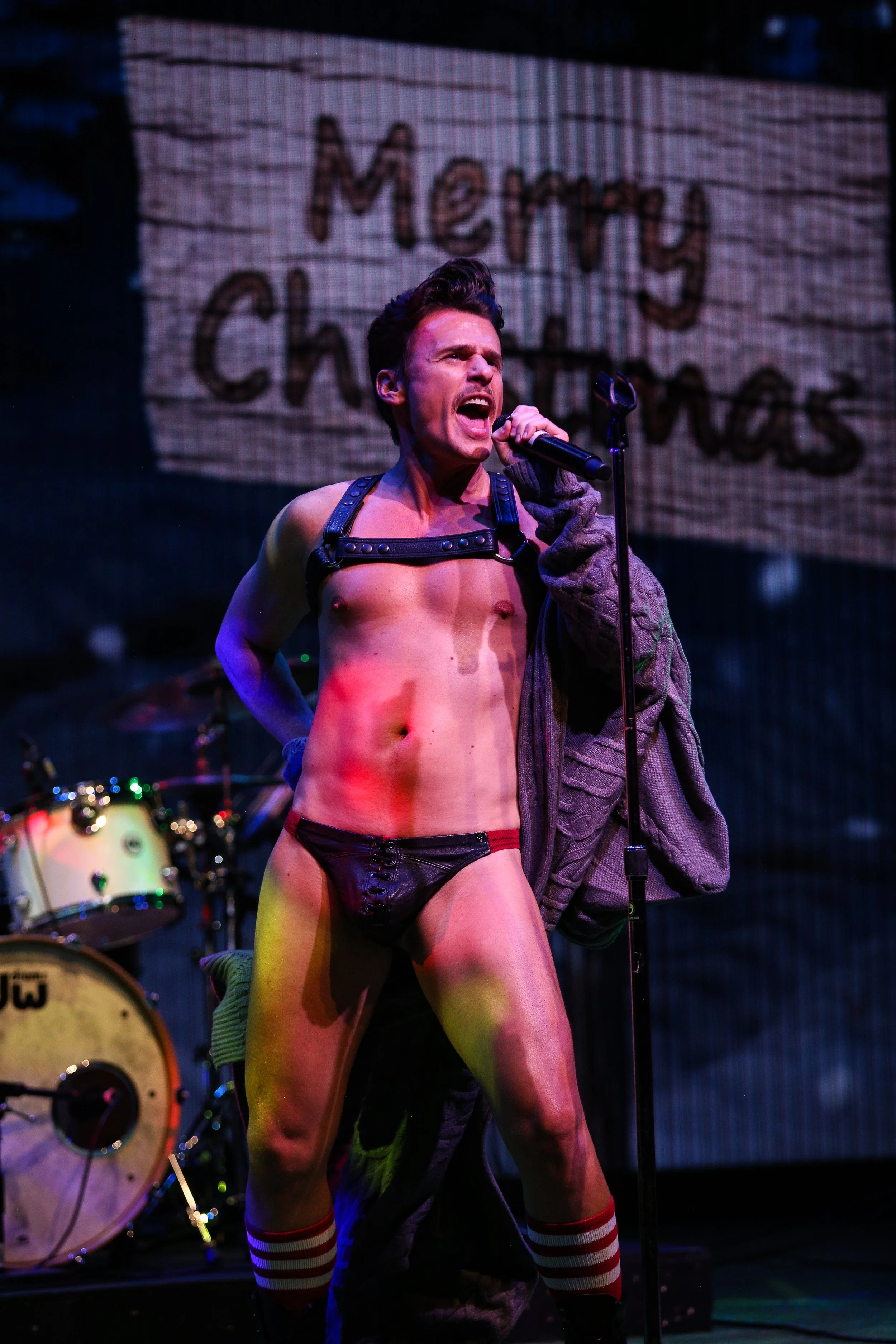
The Laguna Playhouse provides that.
It also provides something else that often goes unnoticed: continuity. In an arts landscape where venues struggle to stay open and programming shifts constantly, this theater has made a commitment to bringing back queer-forward work year after year. That repetition builds trust. It tells audiences that this was not a one-time gesture. It is part of the fabric.
For OC Pride, spotlighting places like The Laguna Playhouse is not about handing out gold stars. It is about mapping the real network of queer life that already exists here. Pride cannot only be a weekend during Pride Month in June or LGBTQIA+ History month in October or a festival gate at the fairgrounds. It has to be a web of spaces where people feel safe showing up as themselves.
Sometimes that web is loud. Sometimes it looks like a parade. And sometimes it looks like a historic theater in Laguna Beach, full of laughter, a little chaos, and a roomful of people who did not realize how much they needed to be there until the lights went down.
If you have not been to The Laguna Playhouse before, consider this your invitation. Whether you are showing up for a holiday concert, a classic play, or something completely unexpected, there is a sense that you are allowed to just be there. In a county where so many LGBTQIA+ folks are used to scanning rooms before settling in, that feeling is not small. It is worth supporting, returning to, and sharing with others.
This spotlight is only the beginning. As OC Pride continues to build a stronger, more visible network of affirming spaces across Orange County, The Laguna Playhouse is very much part of that story. Looking ahead to 2026, keep an eye out for a few joyful surprises and collaborative moments between OC Pride and the Playhouse that we think our community will really love. Sometimes Pride looks like a parade. Sometimes it looks like a packed theater, laughter spilling into the lobby, and the quiet relief of knowing you are welcome here.
